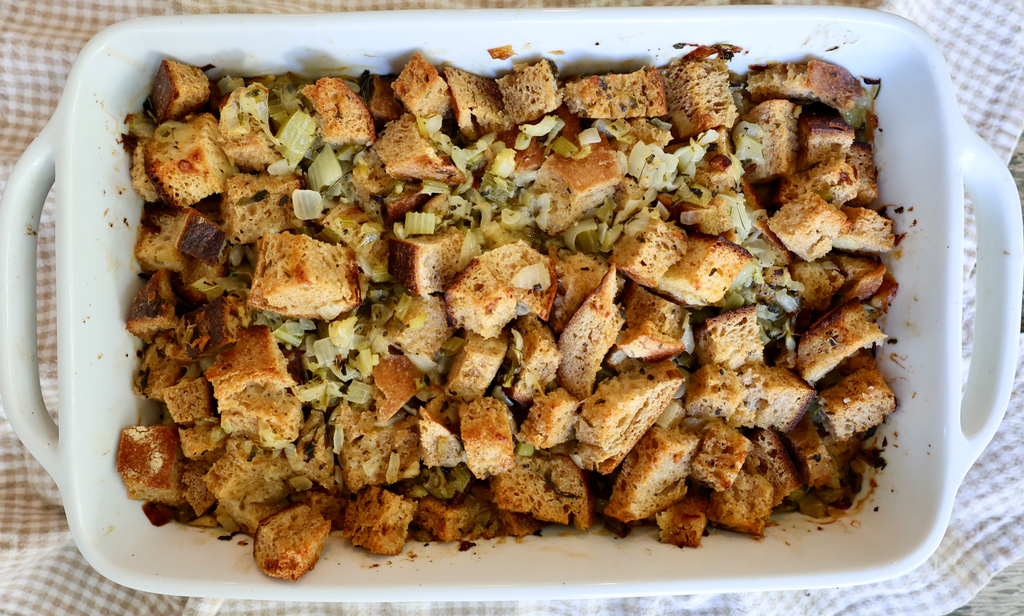
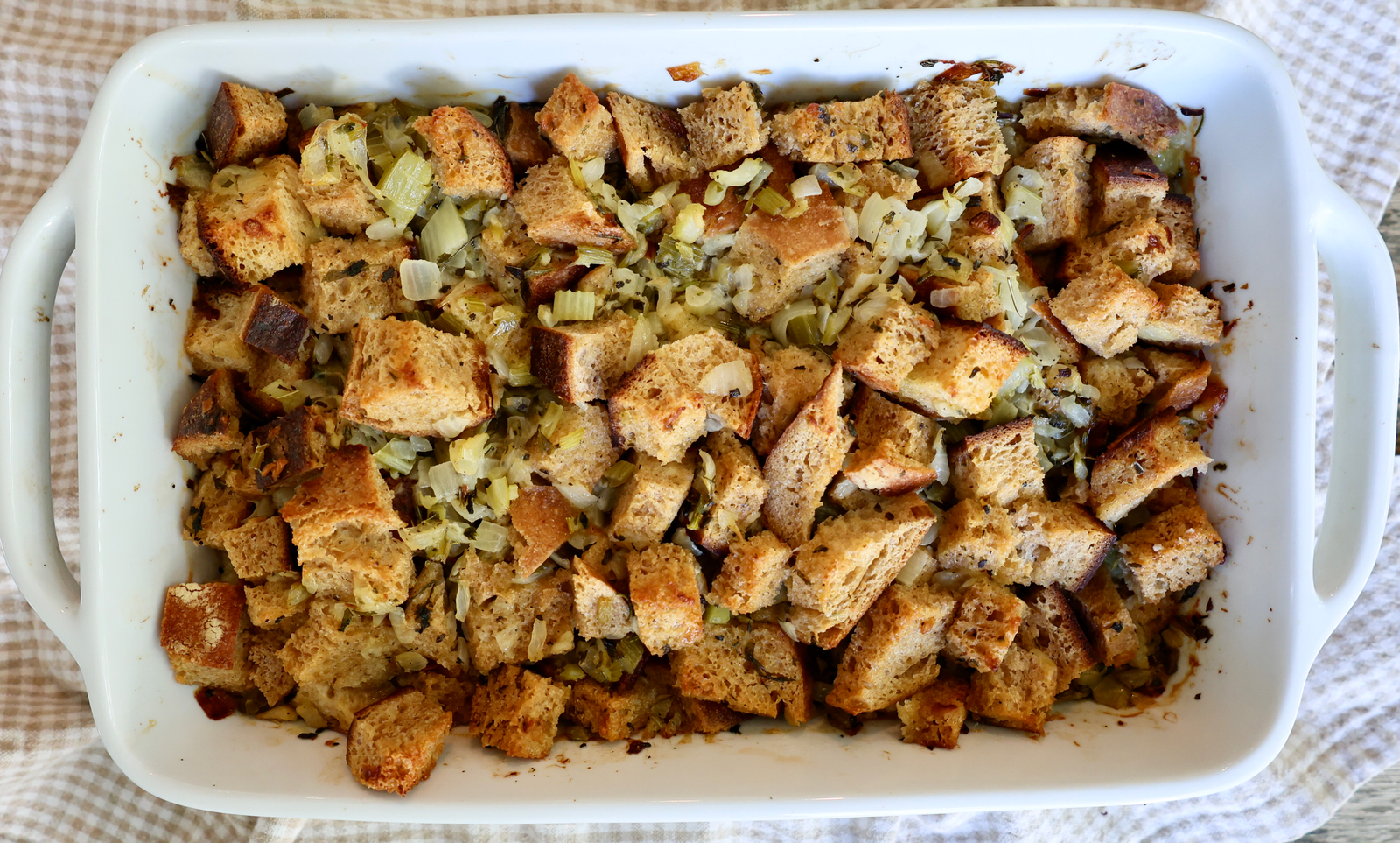
This sourdough stuffing is a classic holiday side dish made with homemade sourdough bread, plenty of butter, tender onion and celery, and fresh herbs. The top bakes up golden and crisp, while the inside stays soft and flavorful, making it the perfect accompaniment to Thanksgiving turkey, Christmas dinner, or a weeknight roasted chicken.
Using homemade sourdough made with freshly milled flour adds something special to this traditional recipe. Freshly milled whole wheat flour brings the natural fiber and nutrients of the whole grain to a dish that is traditionally made with refined white bread. It also gives the stuffing a little extra flavor while keeping the familiar texture and savory herb flavor everyone loves.
The secret to great stuffing is getting the bread dry enough to absorb the seasoned broth without becoming soggy. Once the bread is prepared, the rest comes together easily with buttery vegetables, fresh herbs, chicken broth, and eggs to help bind everything together.
I also love that this stuffing can be made ahead and frozen, which makes holiday meal preparation so much easier. You can prepare it in advance, freeze it until you need it, and have one less dish to worry about when it’s time to gather around the table.
A Few Things to Know
Dry the sourdough without turning it into croutons
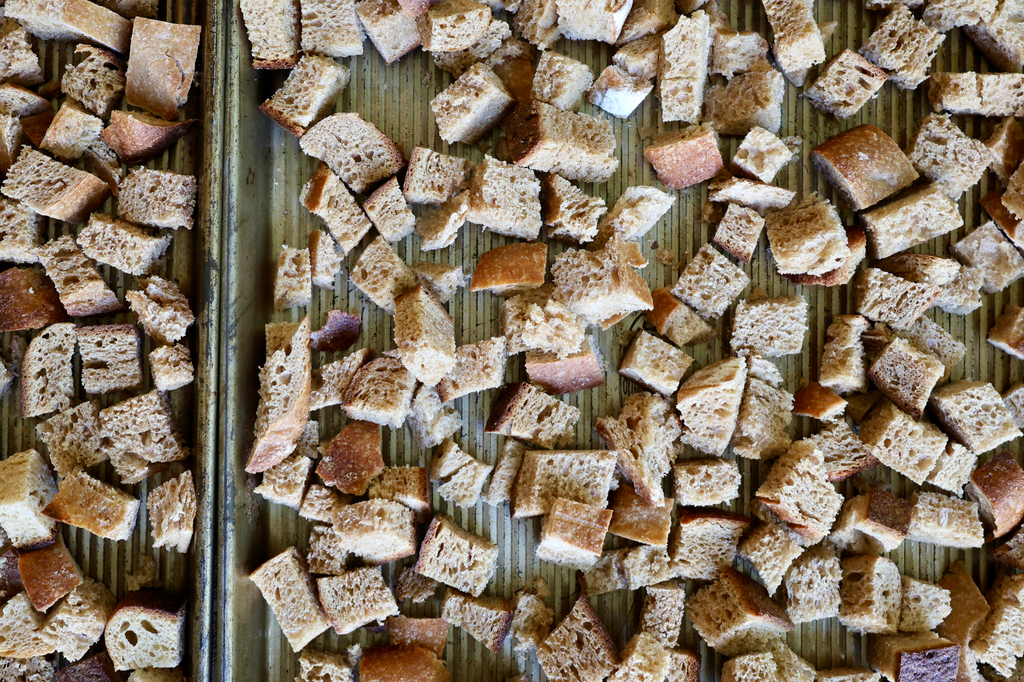
Fresh sourdough often has a moist, chewy interior, so drying the bread is an important first step. Cut the loaf into cubes and spread them on baking sheets. Bake at 300–325°F for about 25–30 minutes, stirring occasionally, until the cubes are dry throughout.
The goal is dry bread, not deeply toasted croutons. The cubes don’t need to become deeply golden or rock-hard. You want them dry enough to absorb the seasoned broth and butter, but not so hard that they stay crunchy in the middle after baking. Let the cubes cool before assembling the stuffing.
Fresh herbs make all the difference
Sage, parsley, and rosemary give this stuffing its traditional savory flavor. Sage brings an earthy, peppery note, rosemary adds a fragrant woodsy flavor, and parsley keeps the herb mixture tasting fresh.
Fresh herbs are especially lovely in holiday cooking, but dried herbs can work in a pinch. Use smaller amounts of dried herbs because their flavor is more concentrated.
Fresh milled flour adds whole-grain goodness
Traditional stuffing is usually made with white bread, but homemade sourdough made with freshly milled whole wheat flour brings the benefits of the whole grain to the dish. Whole wheat flour retains the bran and germ, which contain fiber and other nutrients that are removed from refined white flour.
Stuffing is still a bread-based, carbohydrate-rich dish, but using freshly milled whole wheat sourdough is a lovely way to incorporate more whole grains into a traditional holiday meal without giving up the familiar flavors and textures.
Cook the vegetables until soft
Give the onion and celery 8–10 minutes to soften in the butter before adding the garlic and herbs. This allows the vegetables to develop flavor and ensures you won’t have crunchy pieces of onion or celery in the finished stuffing.
Bake uncovered for crispy edges
Baking the stuffing uncovered allows excess moisture to evaporate and the top to turn golden. If it browns too quickly before the center is hot, cover it loosely with foil for the remainder of the baking time.
Frequently Asked Questions
Can I make sourdough stuffing ahead of time?
Yes! You can assemble the stuffing a day ahead, cover it tightly, and refrigerate it before baking. Check the moisture before baking and add a little extra broth if the bread has absorbed most of the liquid. Bake until the center reaches 160°F. You can also bake it ahead and reheat it before serving. For the best texture, cover it while reheating, then uncover toward the end to crisp the top.
Can I freeze sourdough stuffing?
Yes, and it’s one of my favorite ways to get ahead on holiday cooking. You can freeze the stuffing either before or after baking.
- To freeze unbaked stuffing, assemble it in a freezer-safe dish, wrap it tightly, and freeze. Thaw overnight in the refrigerator before baking. Check the moisture and add a little broth if needed.
- To freeze baked stuffing, let it cool completely, then portion it into freezer-safe containers or wrap the baking dish securely. Freeze for up to 3 months for best quality. Thaw in the refrigerator and reheat covered until hot, uncovering near the end to crisp the top.
Can I use dried herbs instead of fresh?
Yes. As a general starting point, use about 1 teaspoon of dried herbs for every tablespoon of fresh herbs. Dried herbs vary in strength, so adjust to taste.
What can I do with leftover stuffing?
Leftover stuffing is delicious reheated with a little butter. You can also serve it with eggs for breakfast, use it in a Thanksgiving leftover sandwich, or serve it alongside roasted chicken for another meal.
What should I serve with sourdough stuffing?
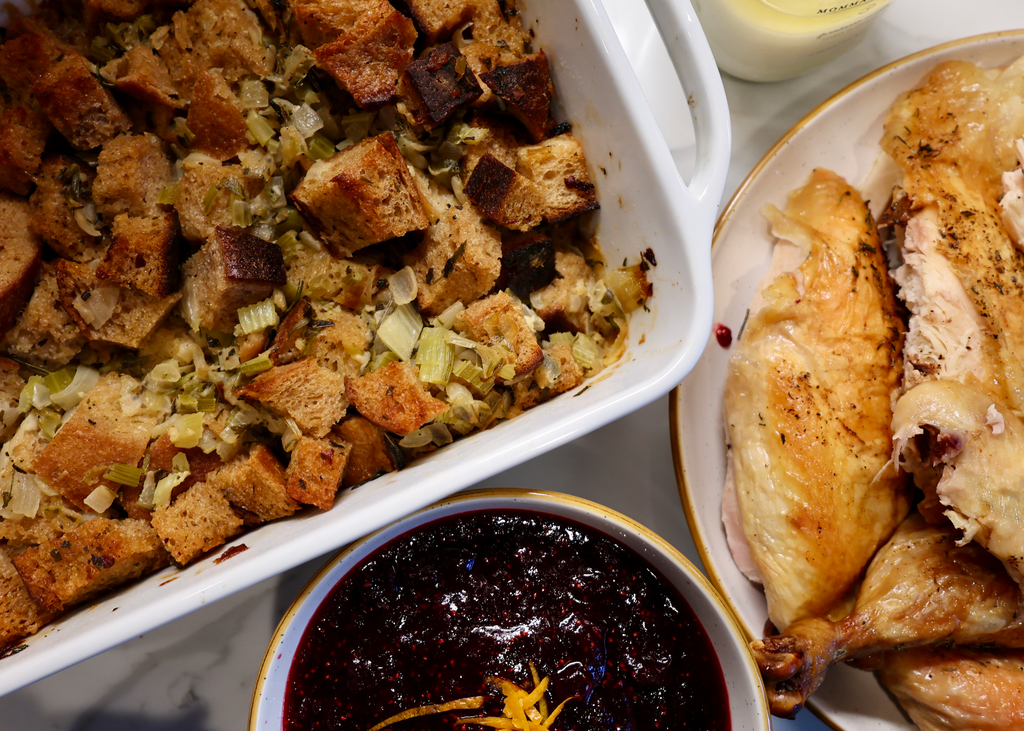
Sourdough stuffing is a natural partner for roasted turkey or chicken, mashed potatoes, gravy, and cranberry sauce, just like the holiday spread in the photo above.
However you serve it, this sourdough stuffing brings all the cozy, buttery flavor of the holiday table with a little extra whole-grain goodness.
Watch the Sourdough Stuffing recipe video below

Sourdough Stuffing
Ingredients
Method
- Dry the bread. Preheat the oven to 300°F. Spread the sourdough cubes on baking sheets and bake for 15-20 minutes, stirring occasionally, until dry throughout. They should be dry enough to absorb the broth, but not deeply golden or like croutons. Let cool.
- Prepare the baking dish. Increase the oven temperature to 350°F. Grease a 9 × 13-inch baking dish with butter. Place the dried bread cubes in the baking dish.
- Cook the vegetables. Melt the butter in a large skillet over medium heat. Add the onion and celery with the salt and pepper. Cook for 8–10 minutes, until softened.
- Add the garlic and herbs. Stir in the garlic, sage, parsley, and rosemary. Cook another 2-3 minutes, until fragrant.
- Combine with the bread. Pour the butter and vegetable mixture over the bread cubes. Toss well so the bread is evenly coated.
- Add broth and eggs. In a separate bowl, whisk eggs then add broth and whisk together. Pour over the bread mixture and gently fold until thoroughly combined. If the bread still seems dry, add a little more broth as needed.
- Bake. Bake uncovered for 45–50 minutes, until the top is golden and crisp and the center reaches 160°F. If the top browns too quickly, cover loosely with foil.
Notes
- Bread weight: Measure about 1½ pounds of sourdough before drying. The finished weight will be lower after moisture evaporates.
- Drying the bread: Dry the sourdough cubes thoroughly, but don’t toast them until deeply golden or hard. They should absorb the broth and butter while allowing the finished stuffing to have a soft, flavorful center and crispy top.
- Broth: Start with 3 cups, adding more only if needed. The amount will depend on how thoroughly the bread is dried.
- Salt: Adjust based on the saltiness of your butter and chicken broth.
- Make ahead: Assemble the stuffing, cover, and refrigerate overnight. Check the moisture before baking, and allow extra baking time if needed when starting cold.
- Freezing unbaked: Assemble in a freezer-safe dish, wrap tightly, and freeze. Thaw in the refrigerator before baking.
- Freezing baked: Cool completely, wrap securely, and freeze for up to 3 months for best quality. Thaw in the refrigerator and reheat thoroughly.
- Storage: Refrigerate leftovers promptly in an airtight container and use within 3–4 days.
“More cozy recipes coming soon — follow along on the All Recipes page.”