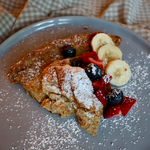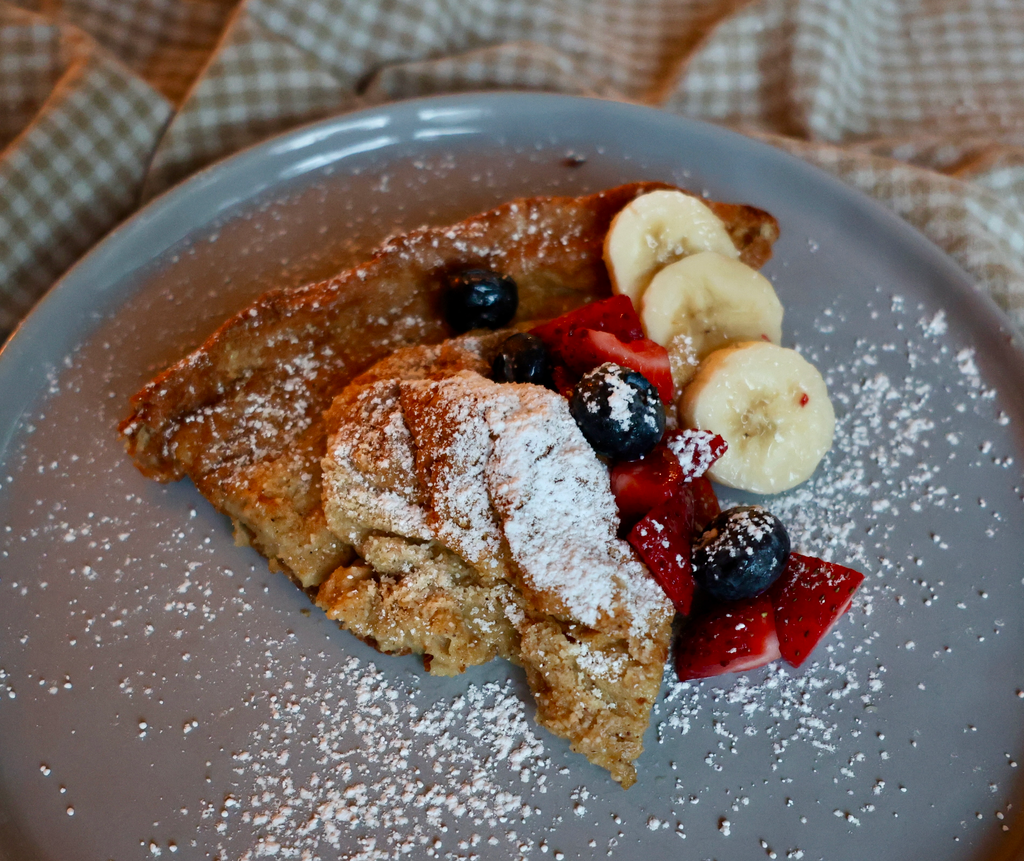
Light and fluffy around the edges with a tender, custardy center, this fresh-milled Dutch baby is a simple breakfast that feels special. Made with freshly milled soft white wheat, whole milk, eggs, and a touch of maple syrup, it’s delicious on its own and easy to adapt with seasonal flavors throughout the year.
I love this recipe because it feels like a special breakfast without requiring much work. The batter comes together in just a few minutes with an immersion blender, and while the Dutch baby is baking, you can prepare whatever you want to serve alongside it.
For fall, I love adding apple pie spice to the batter and topping it with warm cinnamon apples. In the spring and summer, fresh berries or peaches are delicious, while winter calls for warm spices and sautéed pears.
Tips for a Great Dutch Baby
- Use room-temperature eggs: Room-temperature eggs help create a smooth batter and encourage a good rise. If you remember, set them out the night before. If you forget, place them in a bowl of warm—not hot—water for a few minutes before making the batter.
- Weigh your flour: For the most consistent results, weigh your freshly milled flour rather than measuring it by volume. Freshly milled flour can vary in how it settles, so weighing 100 grams will give you a more consistent batter.
- Keep the batter thin: Don’t worry if the batter looks much thinner than traditional pancake batter. It should be smooth and pourable, similar to heavy cream. Don’t add extra flour—the thin batter is what helps create the light, airy edges and custardy center.
- Don’t overblend: An immersion blender makes this recipe incredibly easy to mix with very little cleanup. You only need to blend for about 15 seconds, just until everything is smooth. I prefer it over a loud blender and you can always use a hand whisk too.
- Use a hot skillet: The cast-iron skillet needs to be fully heated before the batter goes in. The combination of a hot skillet, melted butter, and thin batter gives the Dutch baby its dramatic rise and crisp, golden edges.
- Skillet size affects the height: A smaller cast-iron skillet will give you a thicker, puffier Dutch baby, while a larger skillet spreads the batter out more, creating a thinner pancake with wider, crispier edges. I use a 10-inch skillet for a nice balance of height and surface area.
- Don’t overfill a small skillet: If using a skillet smaller than 10 inches, don’t automatically use all of the batter. Leave plenty of room for the Dutch baby to rise, and use any extra batter to make a second one.
- Don’t let the butter burn: Once the skillet is hot, add the butter and swirl until melted. Immediately pour in the batter and return it to the oven. The butter should be hot and melted, but not dark brown or smoking.
- Don’t open the oven: Resist the temptation to peek while it’s baking. Keeping the oven hot and closed helps the Dutch baby rise properly.
- Serve immediately: The dramatic puff is temporary and the Dutch baby will naturally settle as it cools. Bring it straight to the table while it’s hot and serve with your favorite toppings.
Seasonal Variations
Winter
Add ½ teaspoon cinnamon and ¼ teaspoon cardamom to the batter. Serve with sautéed pears or apples in maple syrup and butter.
Spring
Add the zest of 1 lemon to the batter and serve with fresh berries and a dusting of powdered sugar.
Summer
Keep the batter simple and serve with fresh peaches, berries, or lightly sweetened whipped cream.
Savory
For a savory Dutch baby, omit the maple syrup and vanilla. Add ½ teaspoon garlic powder, ½ teaspoon dried herbs, and ¼ cup finely grated Parmesan. Serve with sautéed vegetables, fresh herbs, eggs, or a simple salad.
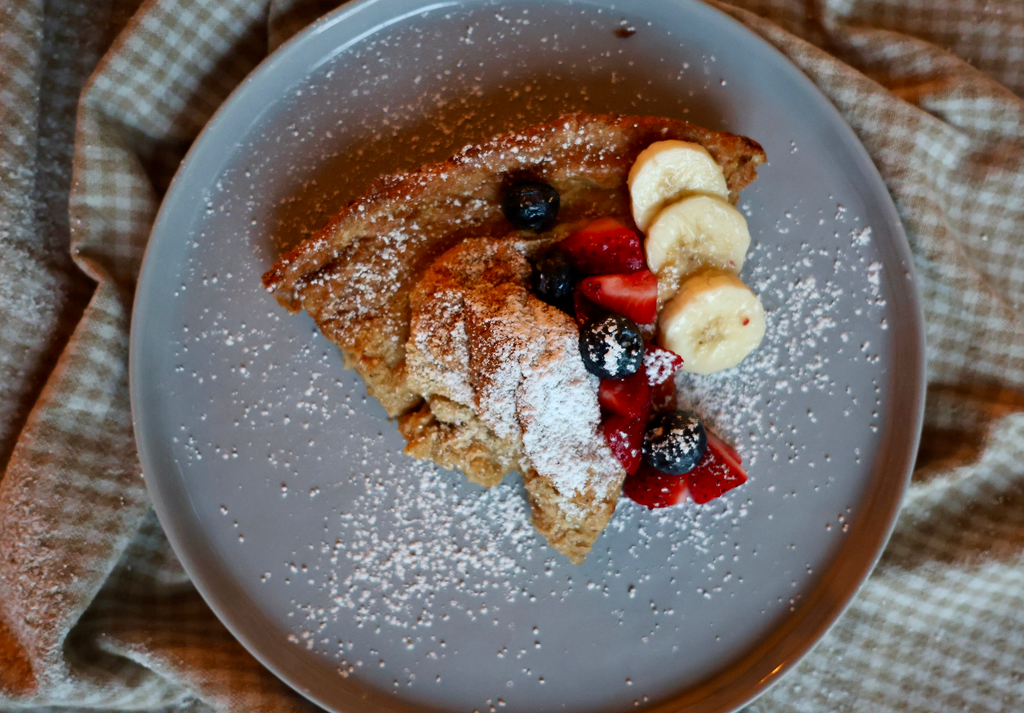
Fall Apple Pie Dutch Baby
For a cozy fall breakfast, add 1 teaspoon apple pie spice to the batter and serve with warm cinnamon apples.
Serve with Warm Cinnamon Apples. Melt the butter in a skillet over medium heat. Add the apples and cook until almost soft. Stir in the maple syrup, and cinnamon and cook for another minute or two. Spoon the warm apples over the Dutch baby and finish with a drizzle of maple syrup.
Frequently Asked Questions
Can I use all-purpose flour instead of fresh-milled flour?
Yes. You can substitute all-purpose flour if needed, although this recipe was developed specifically with freshly milled soft white wheat flour. Fresh-milled flour gives the Dutch baby a tender texture and subtle nutty flavor.
Can I make the batter ahead of time?
For the best rise, I recommend making the batter shortly before baking. The actual preparation is quick, so it works well as a breakfast you can make while the oven preheats.
Why didn’t my Dutch baby puff?
The most common reasons are a skillet that wasn’t hot enough, cold ingredients, too much flour, or opening the oven during baking. Make sure the skillet is fully preheated and your batter is thin and smooth.
Can I use a different cast-iron skillet?
Yes. Just keep in mind that the size of your skillet will affect the finished Dutch baby. A smaller skillet will produce more height, while a larger skillet will give you a thinner, wider Dutch baby.
Can I make this without the apple pie spice?
Absolutely. The base recipe is delicious without any added spices. You can then customize it with seasonal fruit, spices, or savory ingredients depending on the time of year.
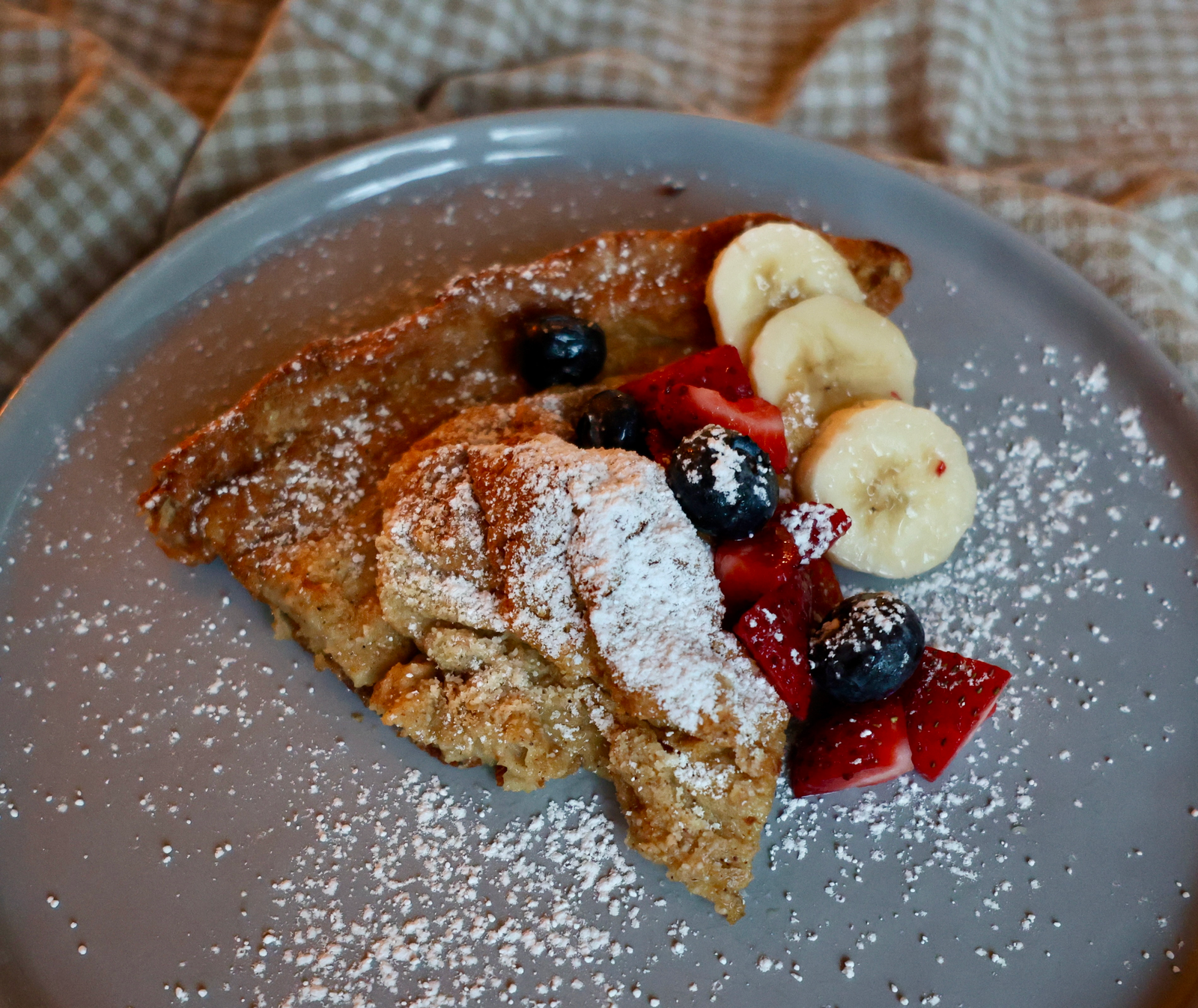

Fresh-Milled Dutch Baby Pancake
Ingredients
Method
- Plan ahead: For the best results, set your eggs out several hours ahead of time, or the night before if convenient. Room-temperature eggs help create a smooth batter and encourage a good rise.
- Place a 10-inch cast-iron skillet in the oven and preheat to 425°F.
- Add the eggs, milk, freshly milled flour, maple syrup, vanilla, and salt to a large measuring cup or mixing bowl. Add the apple pie spice if making the fall version.
- Using an immersion blender, blend for about 15-20 seconds, until the batter is completely smooth and slightly frothy. Hand whisk can work too!
- Optional: Let the batter rest for 10–15 minutes while the oven and skillet finish heating. This gives the freshly milled flour time to hydrate.
- Carefully remove the hot skillet from the oven and add the butter. Swirl the skillet until the butter is completely melted and coats the bottom and sides.
- Work quickly: Once the butter has melted, immediately pour in the batter and return the skillet to the oven. You want the skillet and butter hot, but you don't want the butter sitting in the hot pan long enough to burn.
- Bake for 18–22 minutes, until the edges are dramatically puffed and golden brown.
- For fall version cook sliced apples over medium heat in maple syrup, butter and cinnamon until just soft (4-5 minutes).
Notes
- Fresh-milled flour: Weigh the flour rather than measuring by volume for the most consistent batter. Freshly milled flour can settle differently each time, so 100g by weight is more reliable than a cup measurement.
- Room-temperature eggs matter: Cold eggs can keep the batter from rising as dramatically. Set them out ahead of time, or warm them briefly in a bowl of warm water if you forget.
- You can skip the rest: Letting the batter sit for 10–15 minutes gives the fresh-milled flour time to hydrate but it’s not essential.
- Skillet size changes the result: A 10-inch skillet gives a good balance of height and crisp edges. A smaller skillet makes a puffier, taller Dutch baby; a larger one spreads it thinner with more crispy edge.
- Serve right away: The dramatic puff only lasts a few minutes out of the oven, so have your toppings ready and bring it straight to the table.
- Storage: Leftovers can be refrigerated in an airtight container for up to 2 days. Reheat in a warm oven or skillet — it won’t puff again, but it will still taste great.
“More cozy recipes coming soon — follow along on the All Recipes page.”